Please use this link to subscribe to our YouTube Channel. By subscribing and watching the video, you are helping support the InnerSelf.com website. Thank you.
In This Article:
- The misunderstood meaning of iconic 1960s rock songs
- Growing up schizoid during the British Invasion and beyond
- The healing — and haunting — power of lyrics for misfits
- Why misheard lyrics became meaningful companions
- The cultural contrast of despair and joy in the music of the era
Psychedelic Rock's Misheard Lyrics: Growing Up Schizoid
by Blair Sorrel, author of the book "A Schizoid at Smith".
 Beatlemania had arrived on our shores. The British Invasion of unsurpassed rockers was officially launched. Taking sides on the playground now meant pledging allegiance to the Beatles or Stones. And while my classmates may have been in fisticuffs over this great divide . . .
. . . I remained in my own little world. And worlds apart from the true meaning of those songs. My dial was set to station W-SPD (Schizoid Personality Disorder), the non-listeners' choice. I disassociated alone; the newfangled sound shadowing me as a captivating audible companion to a dreamscape pulsating with drum beats. Wafting to an ethereal sanctuary I would never find among mere mortals.
Focus and Confusion
The more focused thought that they nailed the words, but they too obfuscated, not understanding the double entendres and allegorical language any more than this 'zoid in the void.

"Rainy Day Women" was a popular sixties slang term for reefer. I was a tween when Bob Dylan made the grass greener in many middle-class yards. A force of nature and nasality singing about lapidating me on the way home from grade school or even at our breakfast table. No one clued me to the fact that the title referred to a joint. And not my relatives' aching joints either. Oh, so unfashionably late to the pot party.
"Light My Fire" was the tragic happenstance of a schoolmate playing with his father's spark who bore the marks of self-immolation. Jim Morrison, the babe magnet lead, got booted from The Ed Sullivan Show when he forgot to omit "higher" as requested from the line, Girl, we couldn't get much higher. Even the bad boy Stones accommodated the network and altered "night" to "time" on "Let's Spend the Night Together."
But gosh, golly, gee, what carnality I would never get! "She comes in colours ev'ry where." (Rolling Stones, "She's A Rainbow"). Was this handmaiden any relation to Biblical Joseph and the sartorial choice responsible for his eventual enslavement?
Their "Brown Sugar" could never be released in our politically correct era with its blatant allusions to slavery, rape, heroin, and oral sex.
The very coolest veteran of all time, Jimi Hendrix, wanted to kiss this guy in "Purple Haze." Actually, he bussed the sky as a paratrooper for the 101st Airborne Division (the "Screaming Eagles") before transporting legions of worshipful followers to an interplanetary bliss they would never again encounter. And his "Are You Experienced?" wasn't a potential employer's first line of inquiry. Certainly, as an asexual 'zoid, I wasn't.
Mishearing or Misinterpreting...
Cream's potent "Sunshine of Your Love" became "I'll stay with you till my 'seeds' dry up" (instead of the actual word, "seas")? Forgiven. Sex and drugs and semen and slaughter dominated these rollicking numbers but not always.
Mishearing or misinterpreting and reinventing a phrase is so common it's a phenomenon called "mondegreen." Vocals and instrumentation may muddle matters. Gavin Edwards documents 275 malapropisms in his book "Misheard Lyrics."
Do fans really listen or hear what they want to hear? For us impaired 'zoids, concentrating in public poses a challenge. Musical benefits exceed verbal exactitude. In that pounding escape we can be both lost and found.
Our serotonin surges in chart busting overload. Mind candy without the calories. Living with schizoid personality disorder, I'm always a little punch drunk. Depending on these stellar ditties as an eternal lifeline, why would anyone ever need to get stoned?
Pondering the Benefits
The benefits to the listener don't warrant elaboration. The airwaves emit our "special friend" so we may "dance on fire" "until the end" (Doors' "When the Music's Over"). We literally tune out, transfixed by the elaborate interplay of rhythms and harmonies. Carlos Santana described this addictive mix as "supersonic music" — or when the Holy Ghost takes over and the composer has no idea how he got there.
How often do we ponder the benefits beyond fame and lucre to the creator? Consider all the joy that Jimi Hendrix continues to bring to others, yet he battled his own bouts of depression:
“I can't write no happy songs,” he confided, “'Foxy Lady' is about the only happy song I've written. [I] don't feel very happy when I start writing.”
These compositions reinvent emotions and experience, curb anxiety, and bolster confidence.
Aside from the therapeutic boon, this creativity acts as the same connector for musicians as it does for 'zoids or any other marginalized individuals.
Demons. Jimbo (Jim Morrison) had them and so did John Lennon (and likely a lot of other suffering artists).
“Songwriting is about getting the demon out of me. It’s like being possessed. You try to go to sleep, but the song won’t let you. So you have to get up and make it into something, and then you’re allowed to sleep.” -- John Lennon
Marginalization Becomes "In"
Tunes centered on the marginalized, as more acknowledged if not generally accepted, were becoming faddish. Most emblematic of this trend was The Doors’ release of People Are Strange (1967.) “It’s music for the different, the uninvited,” narrates Johnny Depp, in American Masters/Tom DiCillo’s When You’re Strange: A Film About The Doors, 2010.
Jim Morrison “wrote from the position of being a lonely, alienated person... Jim had a darkness in his writing...in his life,” commented biographer James Riordan, in Break on Through: The Life and Death of Jim Morrison (“Jim Morrison: The Final 24” documentary).
A somberly silhouetted society was apparent with dark The Graduate and black Who’s Afraid of Virginia Woolf? Even minstrels Simon and Garfunkel plumbed a more pensive mood in their reverential ode to blind Columbian, Sanford Green in The Sound of Silence.
Good Vibes and Togetherness
Not all despairing, mind you. The Beach Boys’ Good Vibrations and The Turtles’ Happy Together are indicative of the countervailing jubilant music consistent with a more carefree, fifties’ carryover vibe.
Nineteen sixty-seven inaugurated the Summer of Love at Monterey Pop and propelled the burgeoning youthquake on both coasts. San Francisco and Cambridge surfaced as counterculture antipodes. Two thousand four hundred seventy-five feet from the eminent, but square, Harvard Business School, a triangular plaza in Cambridge transmogrified into a hub for questing artists, students, neophiles, and wannabes searching for a musical or narcotic hit. Eggheads and potheads converged in Harvard Square, evolving as the Aquarian Age axis for all that was hip and happening.
Consciousness and Meaning
The greatest contribution of 1968’s musical renaissance was that songs informed the listener with more consciousness and meaning than ever before. Their lyrics resonated even more profoundly for mavericks who melded with their “special” or “only friend” (The Doors’ When the Music’s Over) to amend for their sidelining and inner turmoil.
Rock stars are a lot more like we listeners than we realize — and they make us realize whatever within us makes us rock!
Copyright 2025. All Rights Reserved.
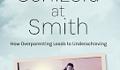
Book by this Author: A Schizoid at Smith
A Schizoid at Smith: How Overparenting Leads to Underachieving
by Blair Sorrel. A Schizoid at Smith: How Overparenting Leads to Underachieving is a breakthrough female narrative instilling greater understanding and possible prevention of this cryptic condition. The memoir is set mostly in the 60s, the heyday of classic rock; icons appear as bit players providing the protagonist's saving grace. Share this Seven Sister's struggle through humor, hope, and all that stellar music, her "special friend." Read on and perhaps you will also emerge a better person.
For more info and/or to order this hardcover book on Amazon, click here. Also available as a Kindle edition and as a paperback.
Also available for purchase on Bookshop.org.
About the Author
Blair Sorrel is an author, innovator, and animal lover. She was Free Time’s “Dollarwise Dilettante” columnist, Together Dating Service’s matchmaker, and New York Blood Services’ apheresis recruiter. She founded StreetZaps to protect dogs and people from stray voltage, and was the first community representative invited by Con Edison to their annual Jodie S. Lane Stray Voltage Detection, Mitigation, and Prevention National Conference. Her memoir is A Schizoid at Smith: How Overparenting Leads to Underachieving. Learn more at rockingtributes.com.
Article Recap:
This reflective piece shares the personal experiences of a girl with schizoid personality disorder navigating the musical landscape of the 1960s. Through misunderstood lyrics and inner isolation, the article reveals how rock songs became lifelines of expression and survival for the emotionally marginalized.
#schizoidpersonality #1960smusic #misheardlyrics #mentalhealthandmusic #BeatlesvsStones #psychedelicrock #musictherapy #JimMorrison #JimiHendrix #innerselfcom